Welcome: Shaanxi Guangke Titanium Industry Co., Ltd.


sales@gktitanium.com +86-19539017809
Grade 23 is Ti-6Al-4V ELI, UNS R56407, the alloy grade used for surgical implants and instruments. ELI means extra-low interstitial: oxygen,…
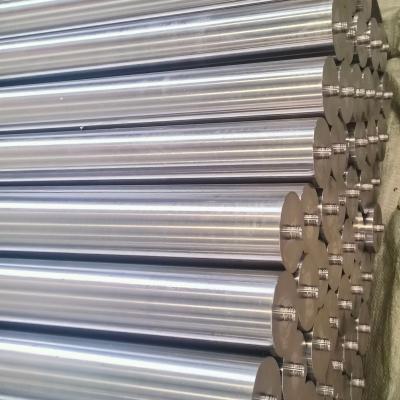
Grade 23 is Ti-6Al-4V ELI, UNS R56407, the alloy grade used for surgical implants and instruments. ELI means extra-low interstitial: oxygen, nitrogen, carbon and iron are held below Grade 5, which buys ductility and fracture toughness. We supply Ø6–100 mm bar to ASTM F136 and ISO 5832-3, traceable by heat number from melt to shipment.
| Element | Grade 23 (ELI) max | Grade 5 max |
|---|---|---|
| Oxygen | 0.13% | 0.20% |
| Nitrogen | 0.03% | 0.05% |
| Carbon | 0.08% | 0.08% |
| Iron | 0.25% | 0.30% |
| Hydrogen | 0.0125% | 0.015% |
ASTM F136 minimums: Rm 860 MPa, Rp0.2 795 MPa, elongation 10%, reduction of area 25%.
Note that F136 sets a lower tensile minimum than B348 Grade 5 does, 860 against 895 MPa, because the oxygen ceiling comes down. A drawing that calls for F136 alongside a 895 MPa minimum is asking for more than that specification guarantees. Oxygen and iron are the two numbers that move in practice, and both have to be reported separately, not as a range.
Grade 23 keeps the strength of Ti-6Al-4V but holds the interstitials that embrittle titanium below the industrial limits. An implant or a bone plate cannot live with the scatter that Grade 5 allows, which is why F136 was written as a separate product specification rather than a note on B348.
Typical work: bone screws, plates, spinal rods, dental implant bodies, surgical instruments, and outside medical, cryogenic and fracture-critical parts. For non-implant use Grade 5 is usually enough and cheaper.
| Form | Range | Condition | Tolerance |
|---|---|---|---|
| Ground round bar | Ø6–80 mm | Annealed | h8–h9 |
| Peeled / turned bar | Ø20–100 mm | Annealed | h9–h11 |
| Cut length | Up to 3,000 mm | As cut | ±1 mm, deburred |
Certificate wording is decided at the mill, before the heat is rolled. F136 and ISO 5832-3 on one document is normal when the lot covers both, but it cannot be added after delivery. Ask in the inquiry.
Titanium for medical and dental applications
| Packing | Individual wrap, sealed bag, ISPM-15 case; clean-room options on request |
| Stock sizes | on request |
| Lead time | on request |
| Minimum order | on request |
Grade 23 or Grade 5?
If the part is implanted or fracture-critical, Grade 23 to ASTM F136. Instrument bodies that never enter the body are usually fine in Grade 5, though your notified body or the customer specification has the last word.
Can you supply F136 and ISO 5832-3 together?
Yes, when the mill certificate covers both. The wording has to be requested at the mill when the lot is ordered.
Is the bar annealed?
Yes, annealed as standard. For instruments that need more strength we quote solution-treated and aged bar to drawing.
Send diameter, length, standard (F136, ISO 5832-3 or both) and the end application. For implant work, tell us whether you need a specific heat lot or a certification format.
Contact: Jessie
Phone: +86-19539017809
E-mail: sales@gktitanium.com
Add: BLOCK A, HUIHANG PLAZA , HANGTUO ROAD, NATIONAL CIVIL AEROSPACE INDUSTRY BASE, Xi'an
LiveChatclose

 Send Email
 WhatsApp