Welcome: Shaanxi Guangke Titanium Industry Co., Ltd.


sales@gktitanium.com +86-19539017809
Grade 5 titanium bar is Ti-6Al-4V, UNS R56400, W.Nr 3.7165, GB TC4: about 895 MPa tensile at 4.43 g/cm³, roughly 60% of the weight of steel at the…
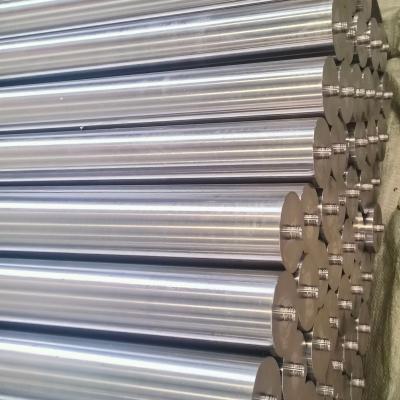
Grade 5 titanium bar is Ti-6Al-4V, UNS R56400, W.Nr 3.7165, GB TC4: about 895 MPa tensile at 4.43 g/cm³, roughly 60% of the weight of steel at the same strength. We supply annealed bar Ø6–300 mm to ASTM B348, with AMS 4911 or AMS 4928 certification where the mill lot carries it.
Ti-6Al-4V is an alpha-beta alloy. Aluminium stabilises alpha and holds strength at temperature, vanadium stabilises beta and helps forgeability. Annealed, it machines predictably with carbide tooling, welds under inert gas and keeps useful strength to about 400 °C. That is why brackets, suspension parts and instrument bodies are usually this grade.
For implants, cryogenic service and thick sections, Grade 23 (Ti-6Al-4V ELI) is the correct callout. We supply both and will say which one a drawing actually requires.
| Specification | Covers | Notes |
|---|---|---|
| ASTM B348 | Ti-6Al-4V bars and billets | Standard industrial callout |
| AMS 4911 | Bars, wire and forgings, annealed | Aerospace, chemistry tighter than B348 |
| AMS 4928 | Bars and forgings | Aerospace, different revision set |
| ASTM F1472 | Wrought Ti-6Al-4V for implants | Medical, not ELI |
| ISO 5832-3 | Wrought Ti-6Al-4V for implants | European medical equivalent |
B348 minimums: Rm 895 MPa, Rp0.2 828 MPa, elongation 10%. AMS revisions add microstructure and ultrasonic requirements, and the revision letter matters, so name it in the inquiry.
| Process | Diameter | Condition | Tolerance |
|---|---|---|---|
| Cold drawn / ground | Ø6–80 mm | Annealed | h8–h9 |
| Peeled / turned | Ø20–300 mm | Annealed | h9–h11 |
| Cut length | Up to 6,000 mm | As cut | ±1 mm, deburred |
Section size affects the numbers on the certificate. A Ø25 mm bar and a Ø250 mm bar rolled from the same heat will not test the same, because the centre cools and works differently. If the part is critical, ask where the tensile coupon came from.
Ti-6Al-4V conducts heat poorly, so the heat stays in the cutting edge. Sharp carbide, high-pressure coolant, low surface speed, and never let the tool dwell. Climb milling and a rigid setup usually matter more than the tool grade.
Buying the bar peeled helps more than most people expect. Peeling takes off the alpha case, the hard oxygen-rich skin left from hot working, and that skin is what kills the first pass. A peeled bar can cost more per kilo and still come out cheaper per part.
| Packing | Bundled with plastic sleeve on wooden skid, or ISPM-15 case |
| Stock sizes | on request |
| Lead time | on request |
| Minimum order | on request |
Grade 5 or Grade 23?
Grade 5 has wider chemistry limits and a lower price. Grade 23 restricts oxygen, nitrogen and iron, and ASTM F136 requires it for implants. For anything that is not implant, cryogenic or fracture-critical, Grade 5 normally does the job.
Can you supply to AMS 4911?
Yes, when the mill lot is certified to the revision you need. AMS stock is thinner than B348 stock, so lead time runs longer.
Do you supply cut blanks?
Yes. We saw to length, face and deburr, and can ship per-piece blanks so your shop starts with a squared part instead of a 6 m bar.
Send diameter, length, standard (B348 or the AMS revision), quantity and end use. If you need ultrasonic or microstructure reports, say so in the first message. It changes which mill lot we pick.
Contact: Jessie
Phone: +86-19539017809
E-mail: sales@gktitanium.com
Add: BLOCK A, HUIHANG PLAZA , HANGTUO ROAD, NATIONAL CIVIL AEROSPACE INDUSTRY BASE, Xi'an
LiveChatclose

 Send Email
 WhatsApp